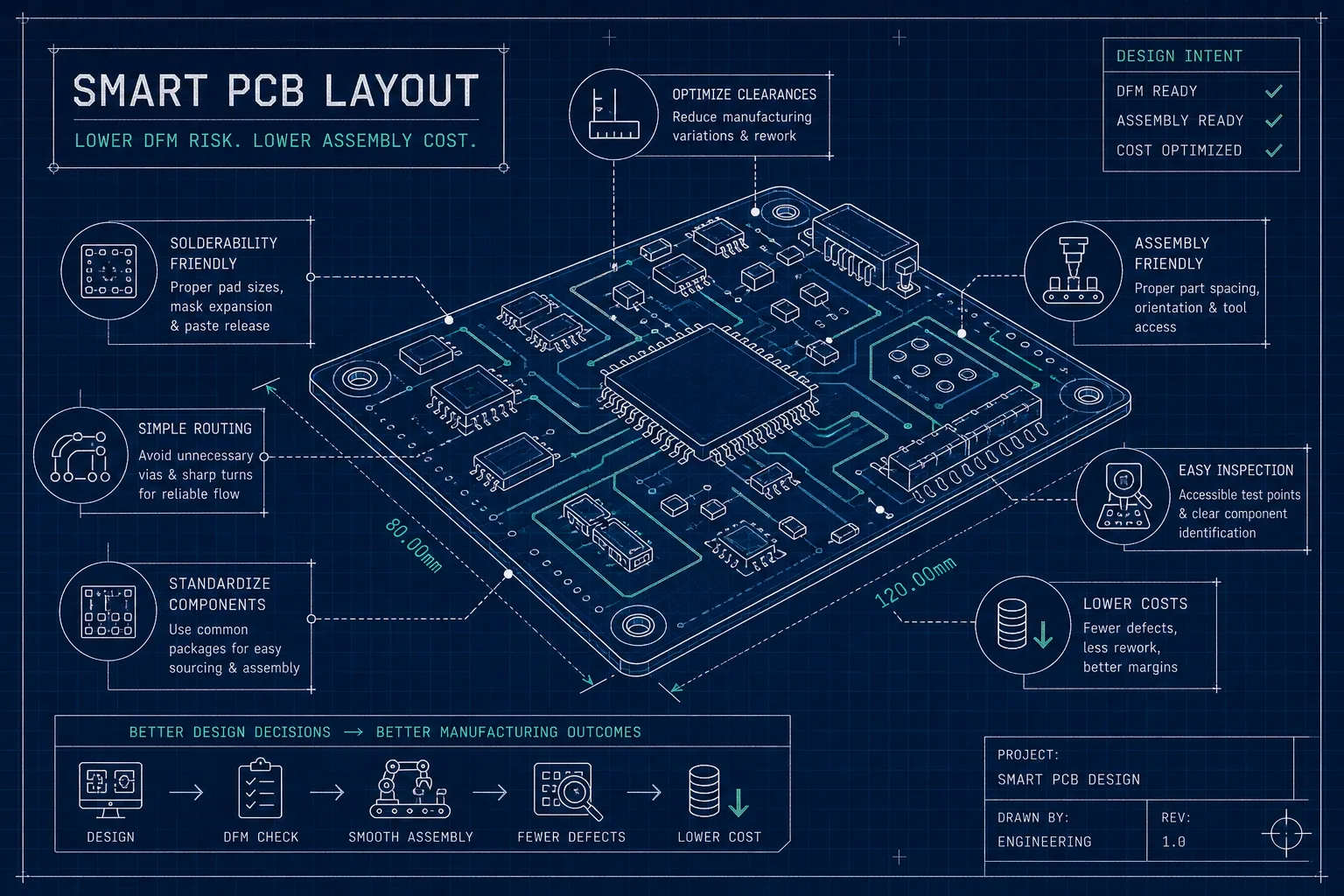
PCB Layout Decisions That Reduce DFM and Assembly Cost
Specific PCB layout choices on layer count, vias, and component orientation drive real DFM cost reductions. See which changes matter most before fab.

Specific PCB layout choices on layer count, vias, and component orientation drive real DFM cost reductions. See which changes matter most before fab.
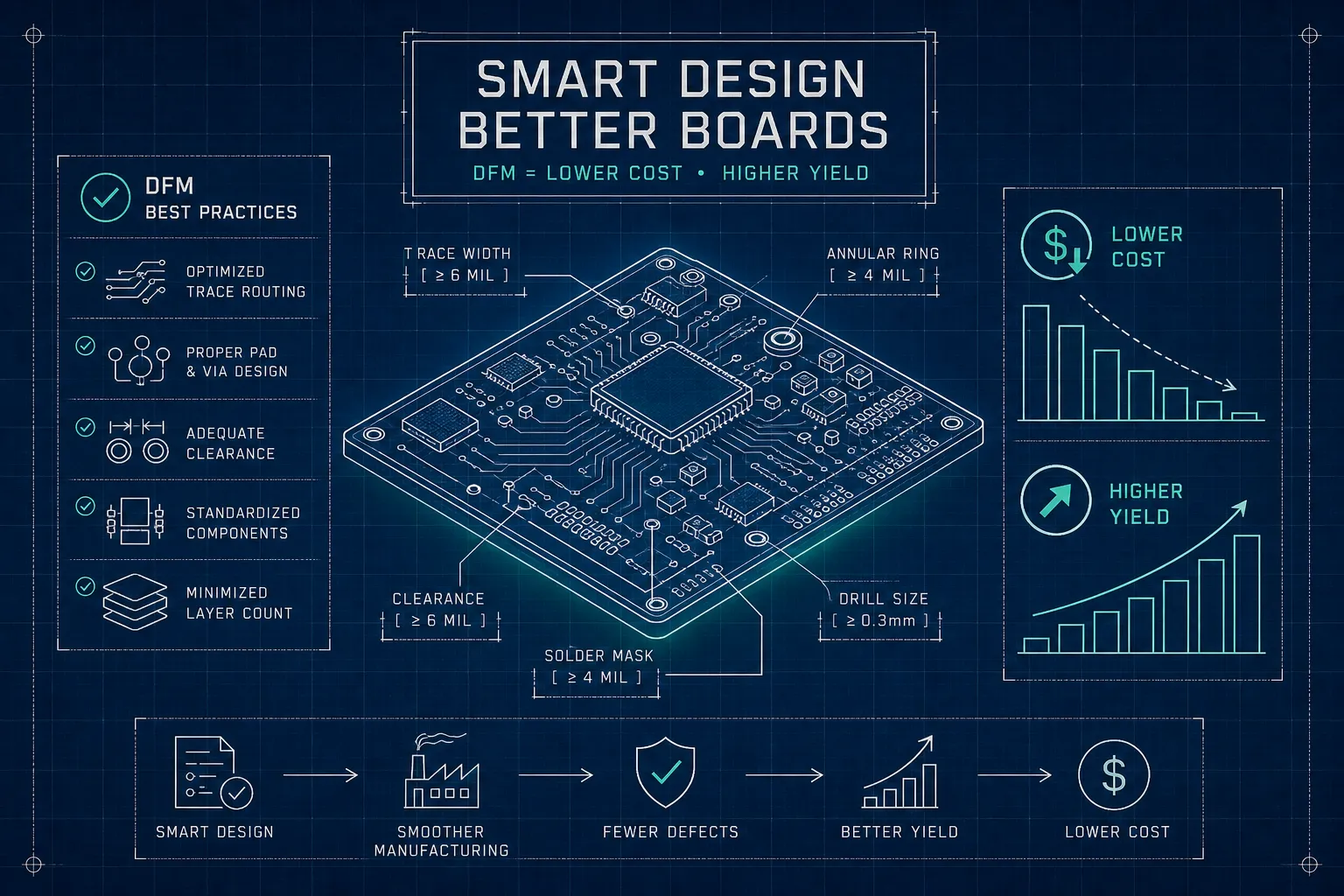
Master design for manufacturability best practices for electronics. Covers SMT pads, via placement, panelization, and BOM hygiene to reduce PCB failures and cost.
Heroics feel like speed, but they’re a symptom of complexity you haven’t removed yet. The OEMs and EMS partners launching fastest aren’t working harder—they’re working in cleaner systems.

DFM optimization strategies for electronics engineers: reduce layers, standardize components, and design for automated assembly. See how Amtech reviews your build.
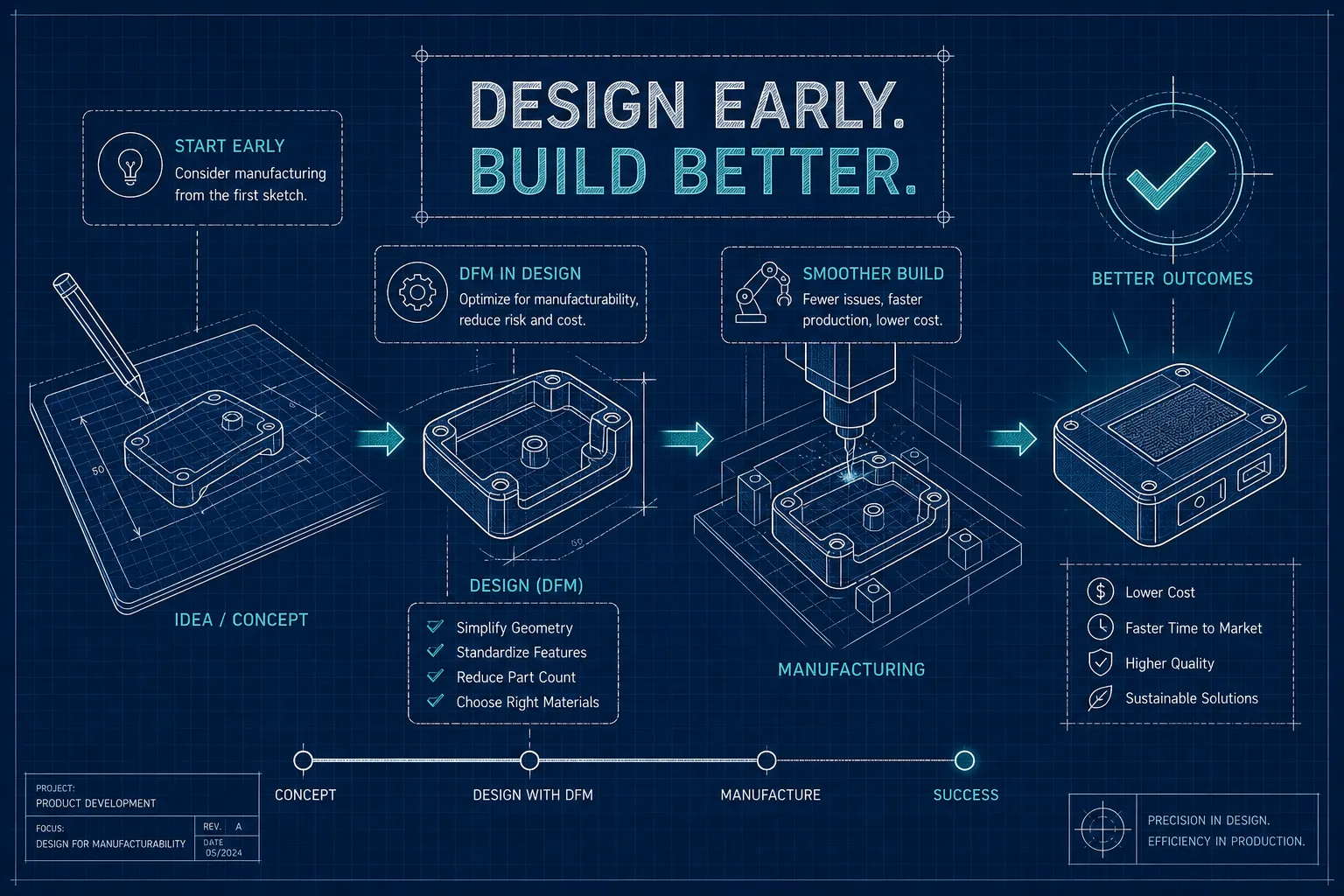
Design for manufacturability determines whether your electronics product builds cleanly or ships late. Learn what it means, why timing matters, and how to apply it.
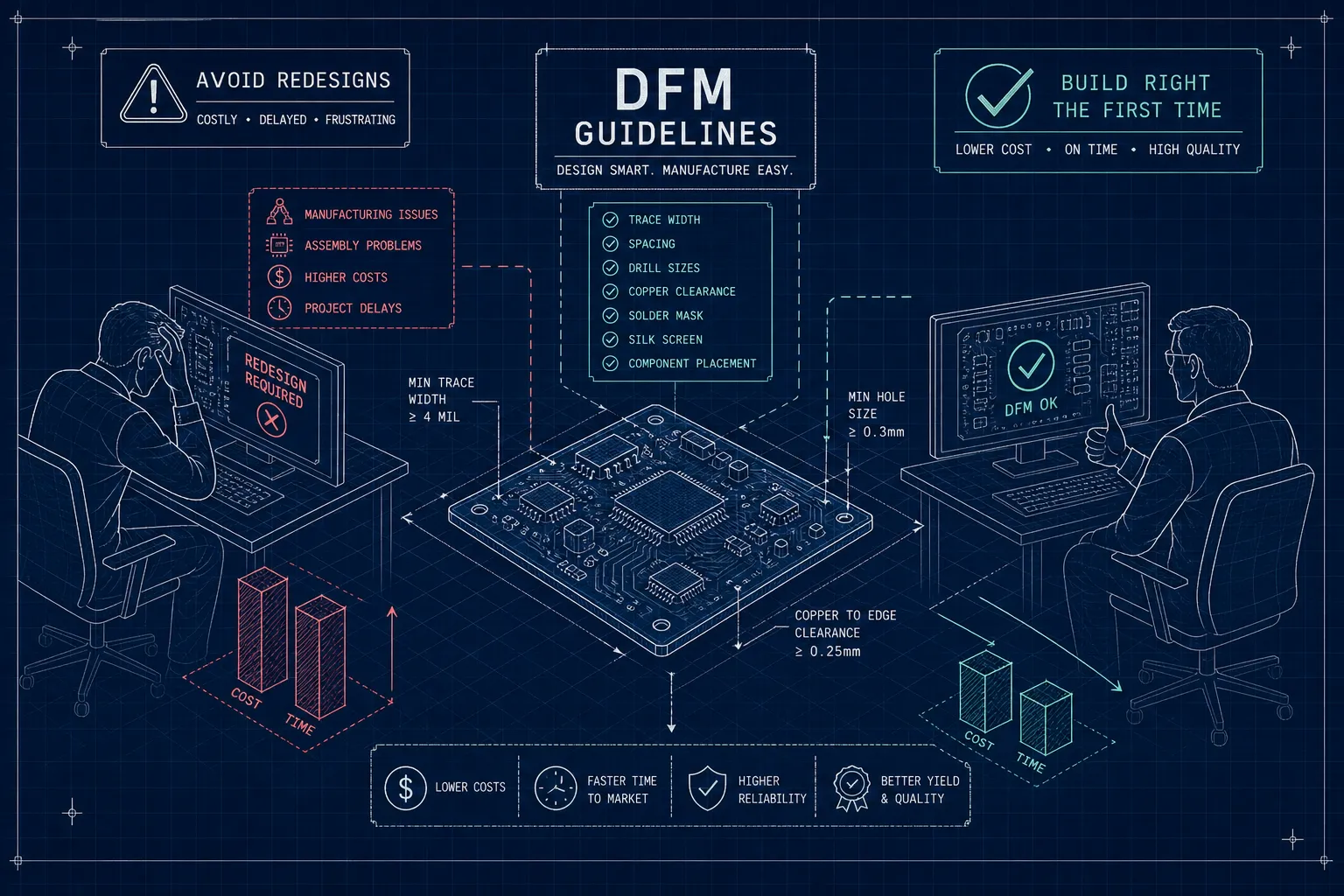
Apply these DFM guidelines before your first board build. Covers PCB layout, component placement, tolerancing, and test access to reduce rework and cost.
We introduced the 3R Promise in early 2025 as a company-wide commitment to Robust, Responsive, and Reliable manufacturing. Sixteen months in, here’s what it actually looks like day-to-day on the floor.

AI edge computing explained: architecture, real-world use cases, edge vs. cloud trade-offs, and the hardware manufacturing challenges that determine product success.

AI hardware spans CPUs, GPUs, TPUs, NPUs, and edge chips. This guide breaks down which processor fits training, inference, or edge AI. Read and choose smarter.

AI in electronics manufacturing is reshaping quality control, yield, and production planning. See how manufacturers like Amtech are building real competitive edges.