
From concept to production, with a team that wants your product to win

We partner with engineering teams to turn ideas into manufacturable, scalable products. Experienced engineers and modern AI tools work side by side to shorten development time, lower risk, and speed your path to production.

End-to-end electronics product development

We support every stage of the product lifecycle, from first concept to full-scale production, so your product is designed for performance, manufacturability, and long-term success.

How we reduce cost and time

AI plus human-in-the-loop engineering

Modern AI tools and experienced engineers work together, so development moves faster without cutting corners.

AI handles

  • BOM risk analysis: lifecycle, availability, cost
  • Cross-referencing and alternate sourcing
  • Design rule validation and optimization
  • Predictive cost modeling

Engineers handle

  • Judgment where it matters
  • Design trade-off decisions
  • Real-world manufacturing insight
  • Customer-specific optimization

AI speeds up the work. Engineers make sure it’s right.

Our approach

Built like a software company

We treat product development as an iterative system.

How we work

  • Rapid feedback loops
  • Continuous improvement cycles
  • Data-driven decisions
  • Structured development workflows

What you get

  • Fewer iteration cycles
  • Issues caught early
  • Predictable outcomes

Six stages, one team

Bring us in at any stage. We carry your product all the way to production.
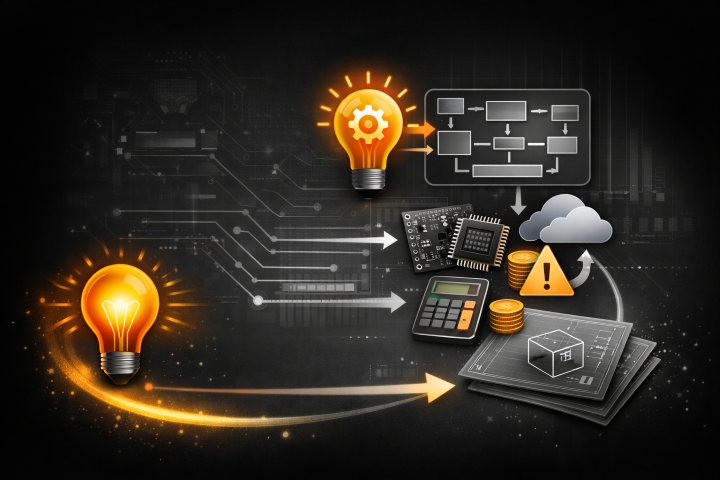
A glowing lightbulb symbolizes an idea, leading to gears, circuit boards, flowcharts, calculators, coins, a cloud, and blueprints, representing the process of turning ideas into functional and profitable solutions.

01Stage

Concept and architecture

  • Product definition and requirements
  • System architecture and feasibility
  • Technology selection: parts, platforms, stack
  • Early cost modeling and risk review

OutcomeA clear path from idea to executable design
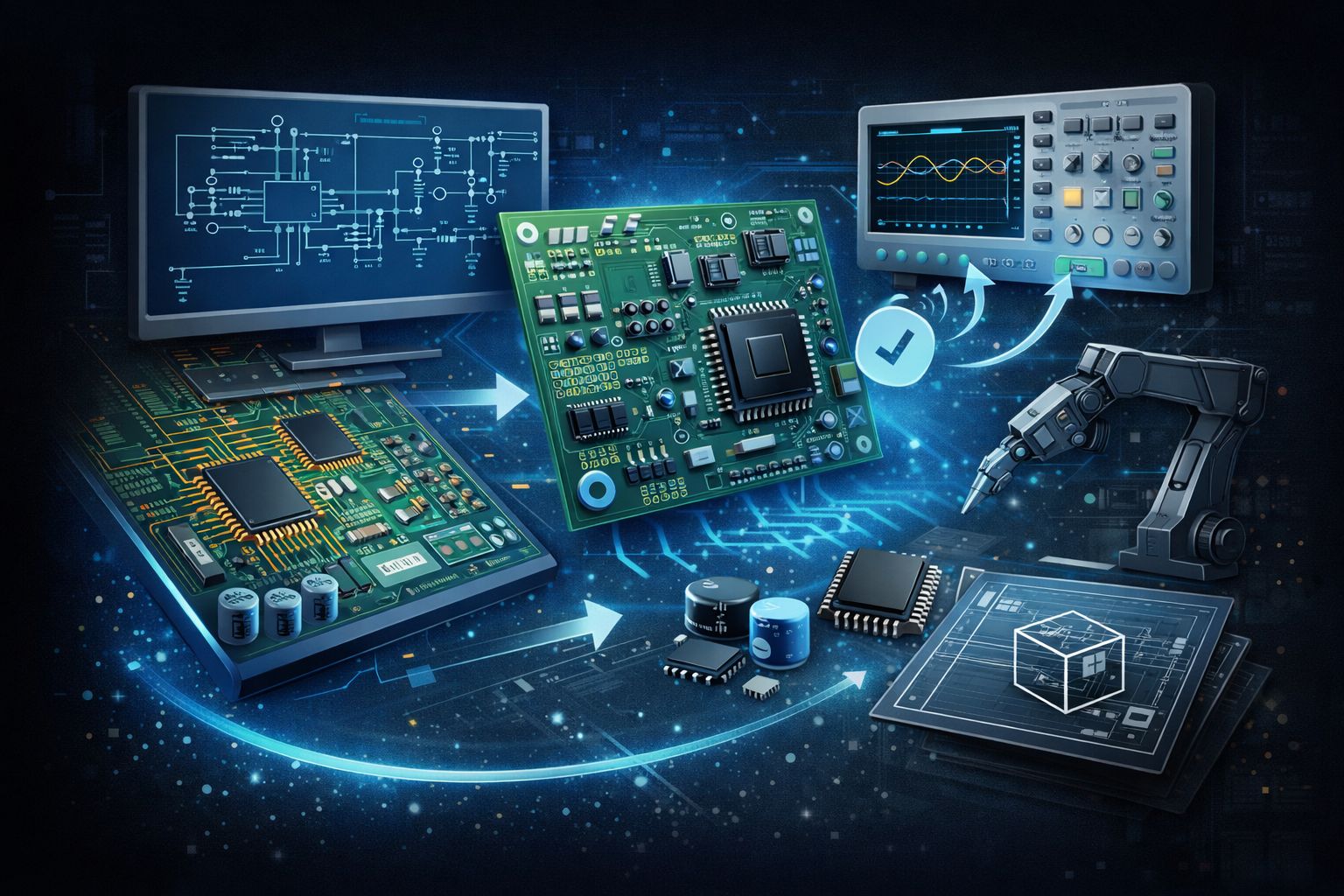
A digital illustration showing the stages of electronic circuit design, from schematic diagrams and circuit boards to testing equipment, robotic assembly, and a 3D design interface, highlighting the technology and automation involved.

02Stage

Electrical and hardware design

  • Schematic capture and PCB layout
  • High-speed, RF, and power design
  • Component selection and lifecycle analysis
  • Design for manufacturability (DFM)

OutcomeRobust designs built for real-world production
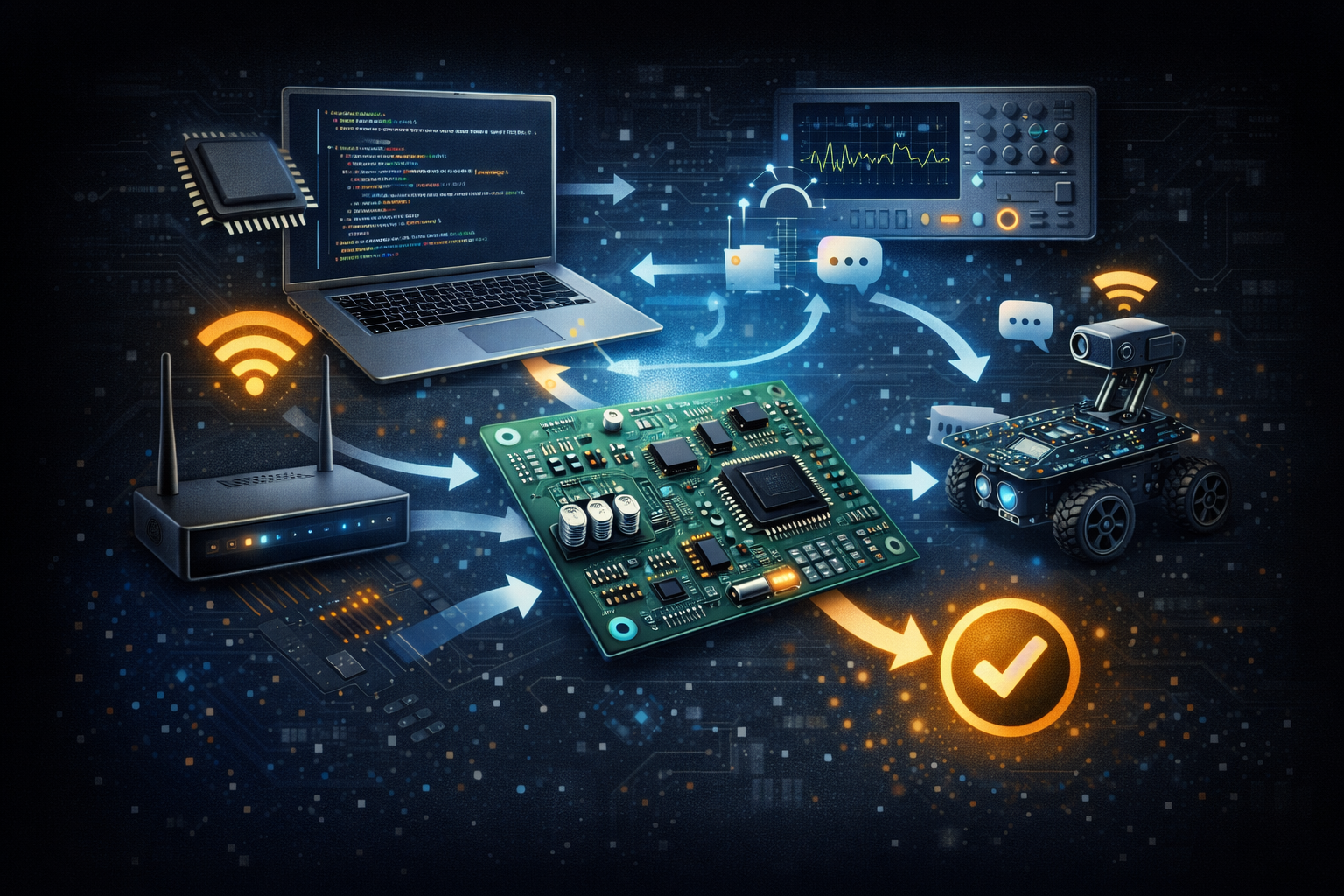
A circuit board is connected by arrows to a laptop with code, a robot, an oscilloscope, and a wireless router, symbolizing communication and integration in electronics or IoT development. A glowing check mark indicates success.

03Stage

Firmware and embedded

  • Embedded software development
  • Hardware and software integration
  • Real-time systems and protocols
  • Functional validation

OutcomeFully integrated, working systems
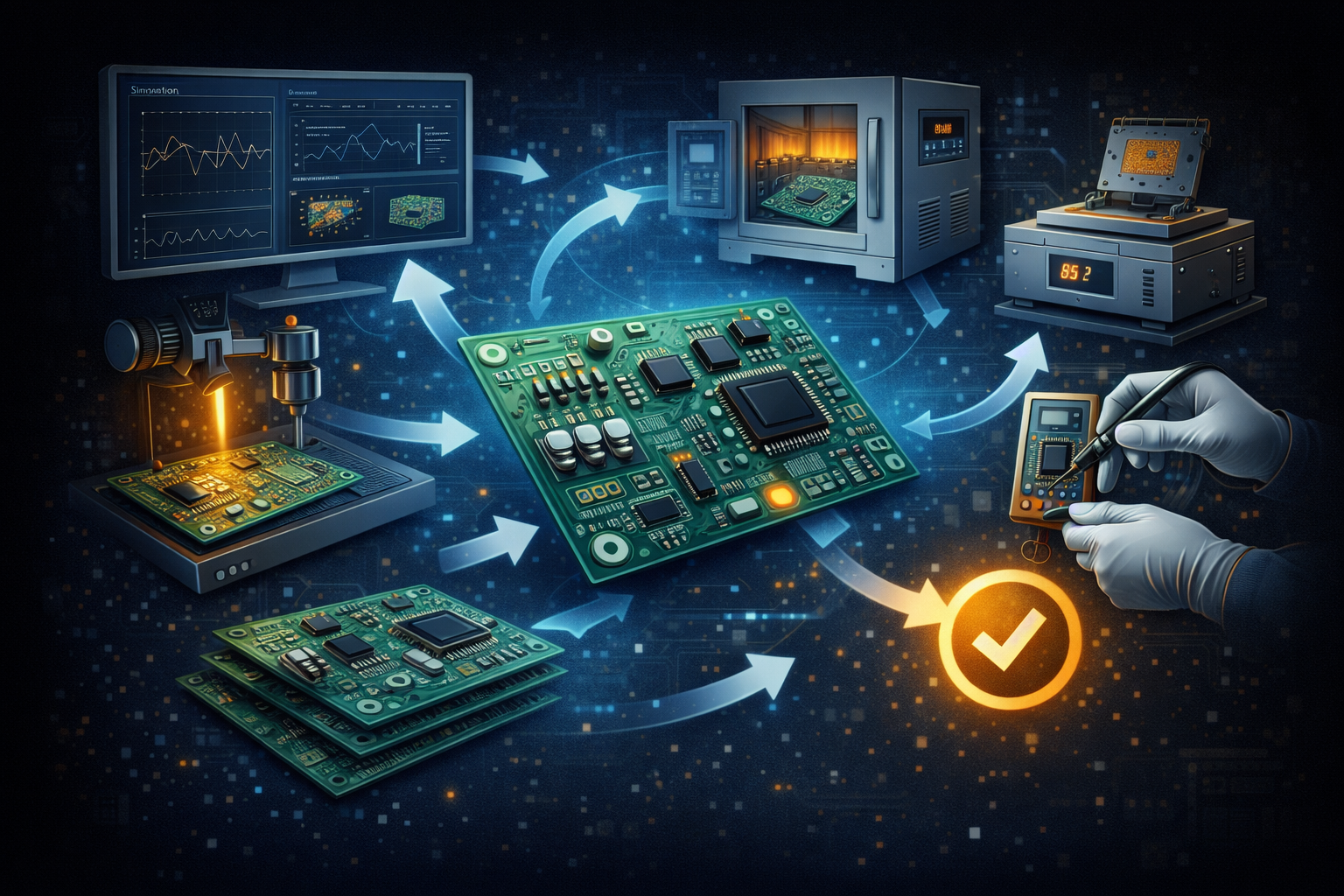
A digital illustration showing various stages of circuit board testing, including data analysis, inspection, temperature testing, and measurement, with arrows connecting each step and a check mark indicating successful validation.

04Stage

Prototyping and validation

  • Simulation and quick-turn PCB assembly
  • Functional testing and validation
  • Fast iteration with rapid feedback
  • Environmental and reliability testing

OutcomeFast iteration with less development risk
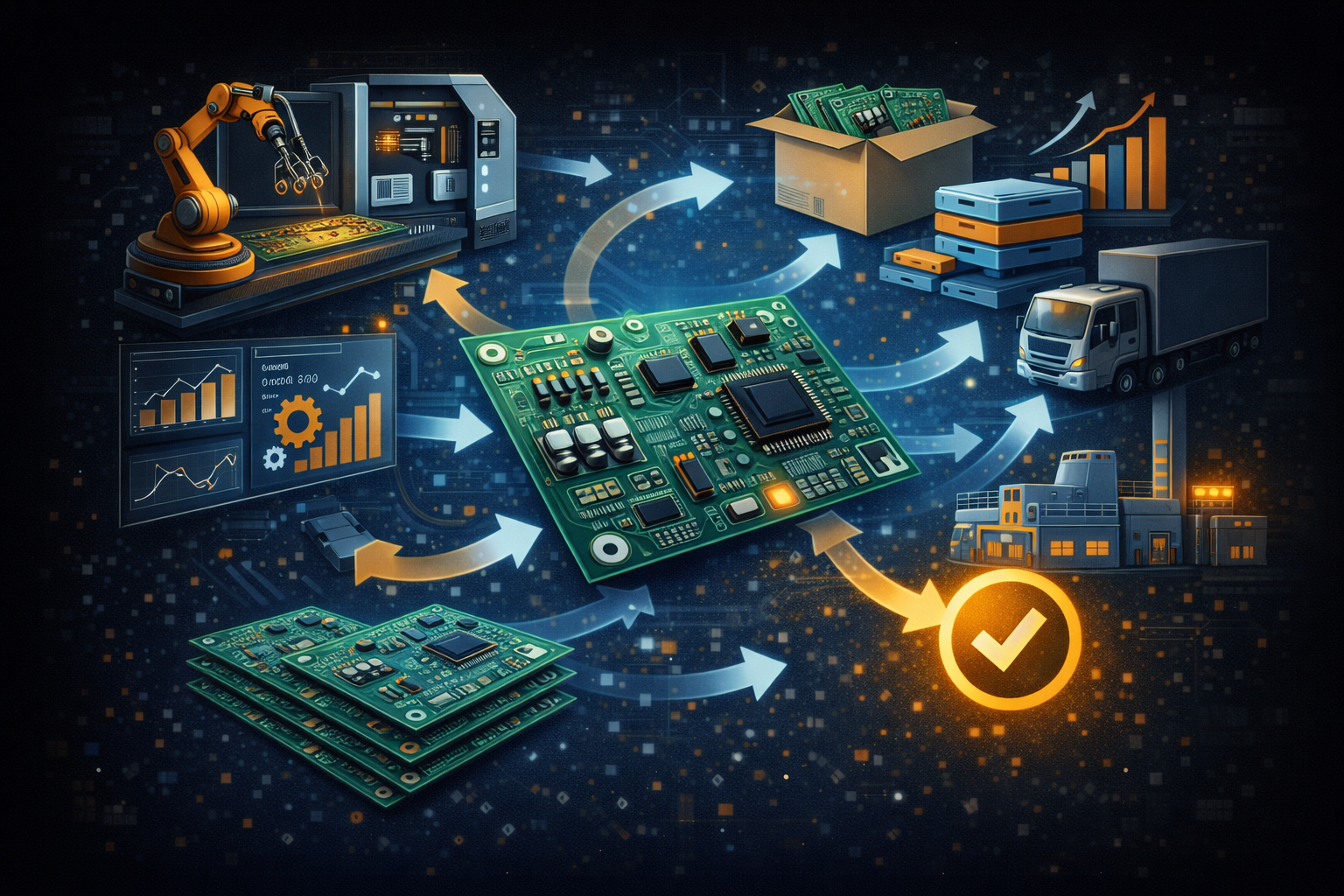
Illustration of a circuit board at the center, surrounded by icons representing manufacturing, robotic assembly, data analytics, stacked boards, logistics with a truck, packaging, and a check mark, connected by arrows.

05Stage

DFM and DFA

  • Process optimization for scale
  • Yield improvement
  • Assembly optimization
  • Supply chain alignment

OutcomeDesigns that scale without surprises
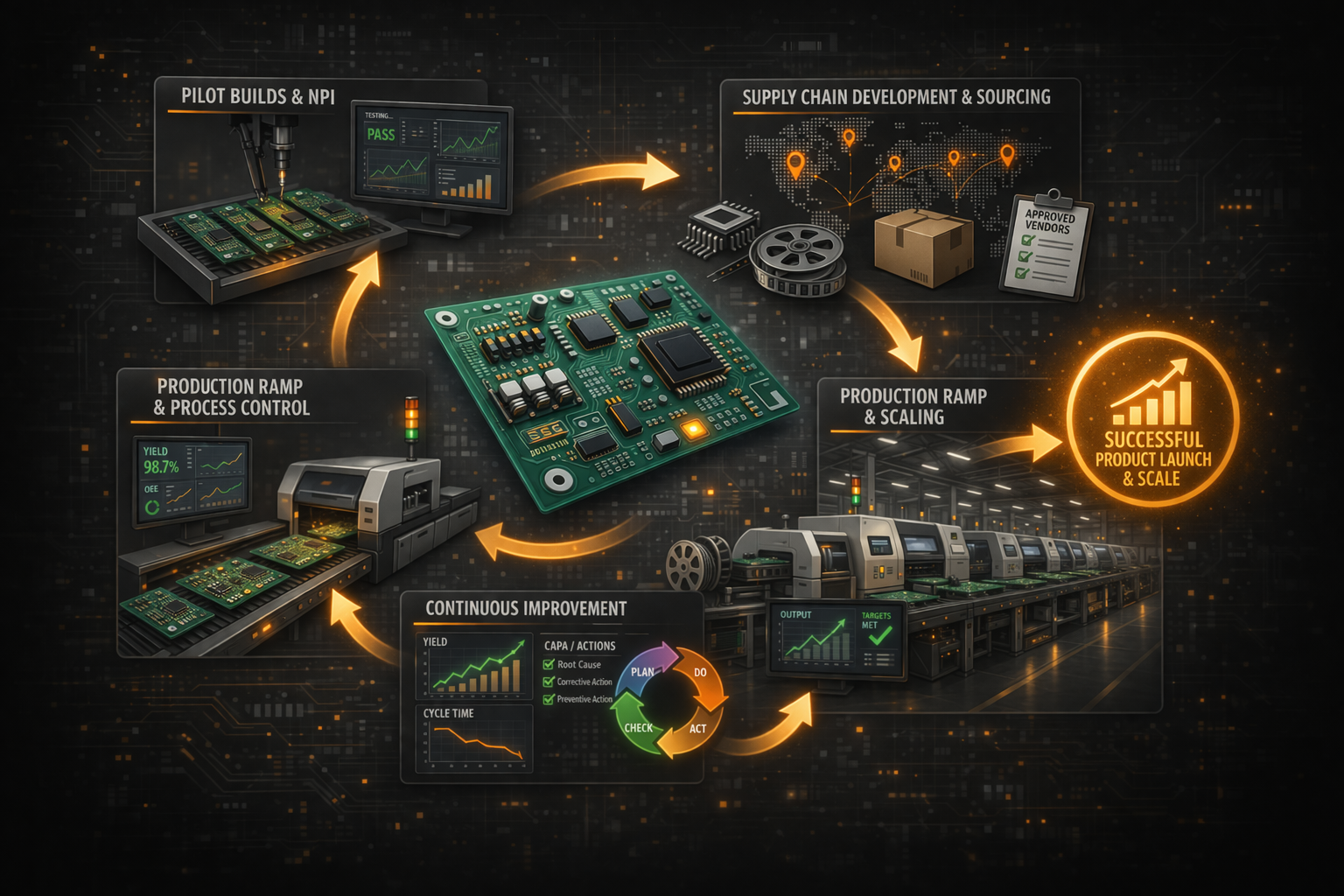
A circular flowchart shows stages of electronics manufacturing, including pilot builds, supply chain sourcing, production ramp, process control, continuous improvement, and ends with successful product launch. Circuit board images illustrate each stage.

06Stage

Production launch and scaling

  • Pilot builds and NPI
  • Supply chain development and sourcing
  • Production ramp and process control
  • Continuous improvement

OutcomeA smooth handoff from prototype to production