
- Lean flow means work moves from step to step without stops or waits.
- Four blockers to look for: bottlenecks, imbalances, complexity and interruptions.
- Map one process, mark the longest wait, and fix that first.
Lean flow in manufacturing means work moves from one step to the next without stops or waits. This is a short recap of our podcast episode on the topic. Read it in five minutes. Then listen to the full episode.
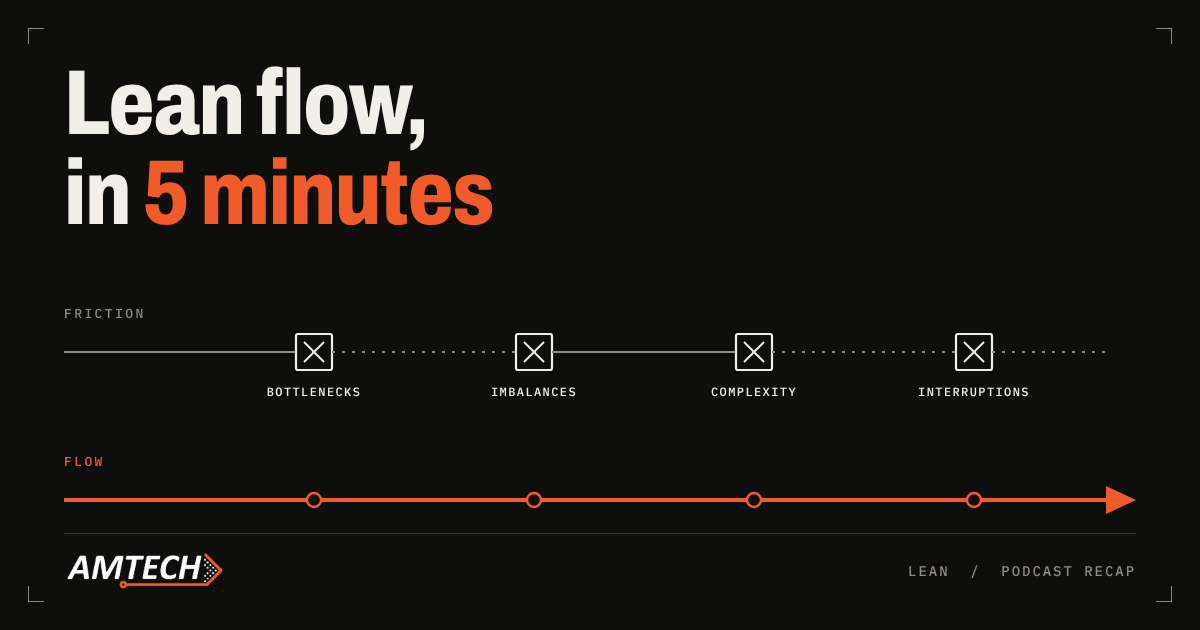
Lean flow in manufacturing: the big idea
In the episode, Jay Patel, CEO of Amtech, says: “Creating flow is the most efficient path of getting what you need to get done.”
Flow is like a river that moves around obstacles. It does not happen by accident. You must design it, and you must keep it up.
Five takeaways
- Flow does not happen by accident. You must design it and keep it up.
- Know your current process first. You cannot improve what you have not mapped.
- Standard tools, such as jigs, remove repeat measuring and cut errors.
- Look for four blockers: bottlenecks, imbalances, complexity and interruptions.
- Flow is never finished. Review it often and adjust.
How to find the blockers
First, map the steps. Value stream mapping shows where materials and information wait. Next, mark the longest wait. Then fix that one first.
Keep flow going
The episode ties this to Kaizen, which means steady, small improvement. Three habits help:
- Monitor and adjust. Check your workflow for new bottlenecks.
- Document and standardize. Write down each process so every shift does it the same way.
- Empower teams. Let people suggest fixes for their own workspace.
The people side
Flow is also about people. Balanced workloads matter. Jay Patel says: “Waiting is the worst thing because you want to get back into it. You want to do it again. Balancing that for people is important.”
Why flow helps the customer
Good flow cuts lead time, helps quality and lowers cost. So the customer gains too. Amtech is a high-mix manufacturer. Small batches and many changeovers make flow matter even more. Early BOM checks help here. See BOMsense.
Try this week
- Pick one process. Draw each step on one page.
- Mark where work waits.
- Fix the longest wait first.
Keep listening
- Episode: lean manufacturing and what customers value most
- Episode: why lean thinking is non-negotiable in HMLV
See how Amtech works in electronics assembly. Have a build in mind? Let’s start.
Get pricing for your build
- RapidRFQ gives you quick-turn budgetary pricing. It is not production pricing.
- Tell us about your program and talk to the Amtech team.
Why Amtech
- About 15 years of vapor phase reflow.
- Family-owned for about 30 years, in Troy, Michigan.
- Certified to ISO 9001, ISO 13485 and IPC-A-610.