
Low to mid volume electronics manufacturing carries the same fixed overhead as high-volume work—but spreads it across far fewer units. That structural cost problem hits hardware teams running 50–5,000 units, and it shows up immediately:
- Low-volume PCBA: $50–$400 per unit
- Mid-volume PCBA: $10–$80 per unit
The gap is real—but not inevitable.
Most of the premium isn’t due to unavoidable economics. It comes from:
- Late design decisions
- Process mismatches
- Sourcing friction
- The wrong manufacturing partner
The following five strategies address each lever directly.
Why Low to Mid Volume Manufacturing Is Different
Short-run manufacturing struggles because:
- Fixed NRE/setup costs don’t scale down
- Suppliers prioritize large buyers
- Testing models don’t fit small batches
- Most manufacturers are optimized for volume
Understanding these constraints is step one.
1. Nail Your DFM Before the First Unit Runs
Most cost is locked in at design—not production.
Key Actions
- Minimize layer count
→ Fewer layers = lower fabrication cost - Standardize drill sizes
→ Reduces tool changes and cost (5–10% per eliminated size) - Prioritize SMT over through-hole
→ Less manual labor, faster assembly - Group THT components
→ Enables efficient wave soldering - Run DFM review early
→ Prevents costly production stops
2. Use Lean Workflows & Flexible Tooling
Short runs require flexibility, not full automation.
Key Actions
- Design SMT lines for fast changeover
→ High-mix production without cost penalties - Use process simulation (digital prep)
→ Reduce trial runs and NPI cost - Match tooling to volume reality
→ Scalable automation > high-capacity systems
3. Optimize Testing Strategy
Testing philosophy must shift from statistical control → risk prevention.
Core Stack
- AOI (baseline)
→ Detects solder and placement defects - X-Ray (when needed)
→ For BGAs and hidden joints - ICT (when justified)
→ Validates electrical integrity - Functional testing (critical)
→ Catches system-level failures early
Skipping functional test = highest-cost mistake in small runs.
4. Build a Resilient BOM
Sourcing is where short runs get hit hardest.
Key Risks
- Lead times:
- MCUs: 13–30 weeks
- Memory: 26–40 weeks
- Power ICs: 40+ weeks
Key Actions
- Identify single-source risks early
- Pre-qualify alternate parts
- Document drop-in replacements
- Use kitting or consignment
→ Protects against allocation shocks
5. Choose the Right EMS Partner
Most manufacturers are built for volume—not your range.
Ask These Questions
- MOQ and pricing at 100 / 500 / 1,000 units
- DFM review process (real or superficial?)
- BOM risk handling
- NPI workflow
- Traceability and serialization
What to Look For
- Scalable automation
- High-mix experience
- Engineering-first approach
Why This Matters
A true short-run partner:
- Maintains quality from 50 → 5,000 units
- Applies full engineering rigor at all volumes
- Supports DFM, testing, and sourcing upfront
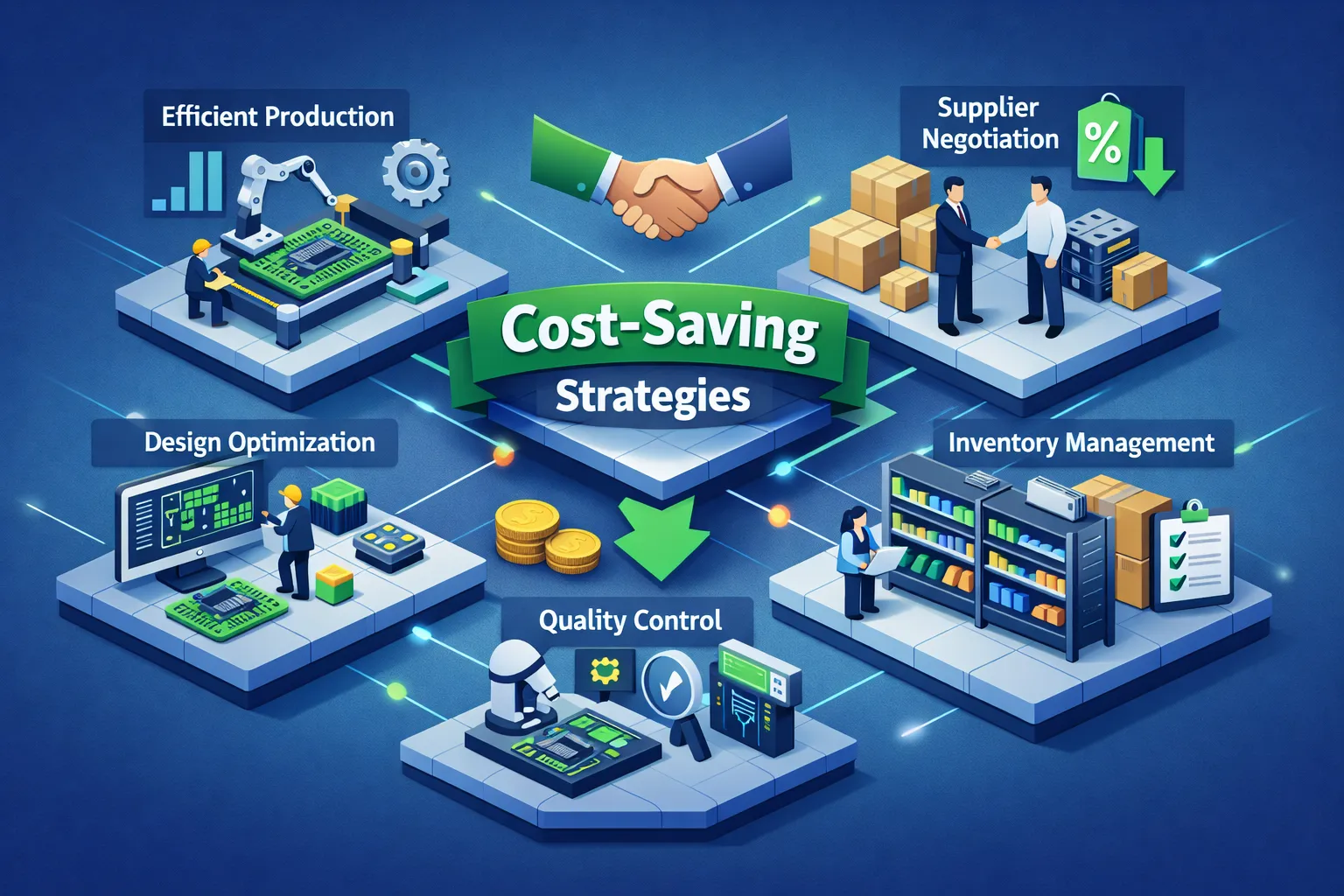
The Big Idea: These Strategies Work Together
This isn’t a checklist—it’s a system:
- DFM → reduces upfront cost
- Lean production → lowers execution cost
- Testing → protects yield
- BOM strategy → prevents delays
- Right partner → ties it all together
Together, they shift low-volume manufacturing from:
“expensive and reactive” → controlled and optimized